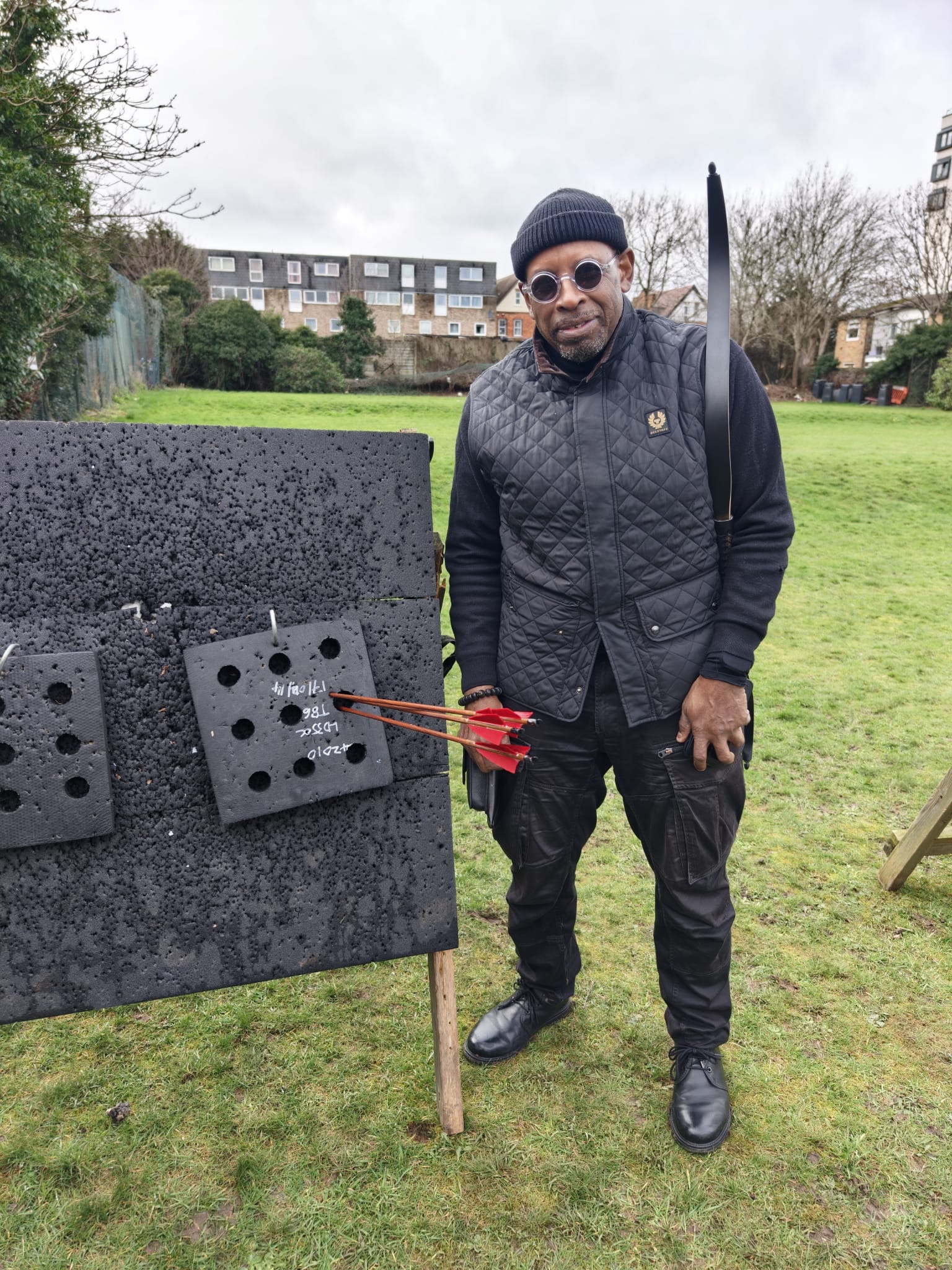
My name is Kinda Hoji. I’ve been shooting for well over a decade and I’m a proud, unrepentant modern compound archer. I also sit on the board of Archery GB which means I have to behave responsibly in meetings, but absolutely not on the shooting line.
Over the years I’ve dabbled in other bow styles. I’ve owned an English longbow, a couple of field recurves and even a few Asiatic bows. I shot them. I admired them. I nodded respectfully at them. But in my heart? It’s always been about the compound. Yes, yes I’ve heard it all. “Helper wheels.” “Walking on the dark side.” “That’s not real archery.” I’ve been cheerfully reminded for years that recurve was the only Olympic discipline. The only one. The chosen one. The halo-wearing golden child of the Games. Compound shooters were, apparently, the slightly suspect cousins at the family gathering.
Well. Imagine my delight, my pure, unfiltered joy, when compound archery was announced for the Los Angeles 2028 Olympic Games. That’s right. Olympic. Bow. Who’s got helper wheels now? (Love you really, recurve friends. Please don’t move my sight when I’m not looking.) Despite my deep and abiding loyalty to cams and cables, I had a sudden impulse a few weeks ago to try something completely different: Mamluk-style thumb-draw archery.
Naturally, I signed up for a six-week introductory course with the excellent Archery for All in Norbury, South London. Under the watchful eye of Coach Jehad Shamis. I’m now Five weeks in and I have one word: enlightening. Actually, several words: humbling, fascinating, transformative… and occasionally ego-bruising.
This course has been extraordinary. It is a perfect example of how inclusive our sport truly can be. On the shooting line you find history, culture, athleticism and community woven seamlessly together. What struck me most was the depth of historical and cultural significance embedded in every stage of the draw cycle. Nothing is accidental. Every movement has lineage. Every technique has context. It’s archery with ancestry.
And here’s the unexpected twist: the more I understood the mechanics and philosophy behind thumb-draw technique, the more it improved my overall shooting. Even my compound form has benefitted. Balance. Alignment. Intent. Presence. Who knew the “dark side” could learn from tradition?
I’ll say this plainly: we need to do far more to promote thumb-draw archery within the wider archery community. There are a handful of national competitions beginning to include it which is brilliant but there is room for so much more. This style deserves visibility, respect and opportunity.
As for me? I remain a committed compound archer. I still love the precision, the engineering, the unapologetic modernity of it all. But my loyalty is no longer exclusive. My love is now gloriously divided.
The cams are staying. The thumb ring isn’t going anywhere either. And I shall continue, quite happily, to stand on the shooting line — absorbing banter from both sides — knowing that whether it’s helper wheels or horse-bow heritage, it’s all part of the same magnificent sport.
Just saying.