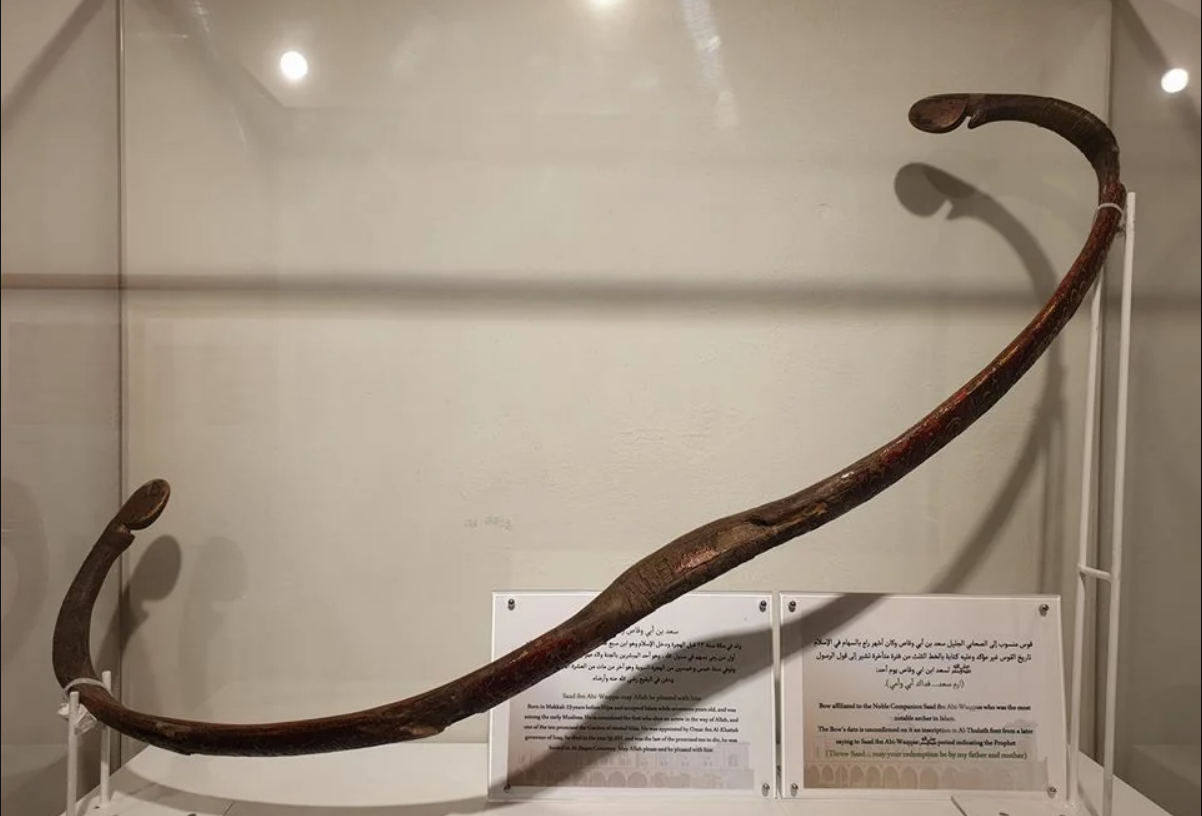
Archery has occupied a distinguished place in Islamic culture for centuries, and many of the classical manuals begin by situating the practice within a sacred and historical framework. Two of the most influential surviving texts are Taybugha al‑Ashrafi’s 14th‑century Mamluk treatise—made accessible today through its translation Saracen Archery—and the Ottoman work of Mustafa Kani, translated as Sacred Archery. Although written several centuries apart, both reflect an enduring reverence for the art of shooting and its moral significance. Both relate the story of Adam عَلَيْهِ السَّلام, who after being sent down to the earth, was commanded to raise crops. Two birds ate from what he had sowed and when Adam عَلَيْهِ السَّلام complained of this to The Almighty, Jibra’il AS descended with a bow, a string and two arrows. On asking what these were, Jibra’il AS placed the bow in Adam’s عَلَيْهِ السَّلام hand and said the bow is the force of Allah (قُوَّةُ الله). Then he handed him the string and said the string is the might of Allah (شدَّةُ الله). He then gave him the two arrows and said that the arrows are the harm to be inflicted by Allah (نِكايةُ الله). He then taught Adam AS archery to fend off the birds.
Kitab fi Ilm An-Nussab, a 14th century archery treatise written in Mamluk-Kipchak during the Mamluk reign in Egypt, conveys two stories as they relate to the bow of Ibrahim عَلَيْهِ السَّلام. The first is that a bow of paradise was sent down to Ibrahim عَلَيْهِ السَّلام and Ismaeel عَلَيْهِ السَّلام used that bow to shoot. The second tradition notes that Ibrahim عَلَيْهِ السَّلام made two bows, one of which he gave to Ishaaq عَلَيْهِ السَّلام and the other to Ismaeel عَلَيْهِ السَّلام. The practice was passed on to the Arabs from Ismaeel عَلَيْهِ السَّلام.
There are many Prophetic traditions relating to this noble art which shall be expounded on in another article. The tradition of archery was carried on through the noble companions رَضِي الله عنهم, the most prominent of which we note is Sa’d ibn Abi Waqqas رَضِي الله عنهُ – who loosed the first arrow in the path of Islam. He is one of the ten companions given glad tidings of Jannah and is known as the Master of Archery. His mastery and dedication established a model that continued through subsequent generations. Classical archery literature also preserves transmission chains of instruction, naming early masters of the art: Abu-Hashim al-Mawardi, Tahir al-Balkhi and Ishaq al-Raqqi. Abu-Hashim was of the tabi’in and took the qabdha (bow grip / permission) directly from Sa’d ibn Abi Waqqas RA. Tahir al-Balkhi also resolved to take the qabdha from Sa’d رَضِي الله عنهُ but arrived only after his death and took the qabdha from the daughter of Sa’d رَضِي الله عنهُ. Ishaq al-Raqqi took the qabdha from Abu-Hashim.
This is the history upon which the foundation of our noble art rests. The teachings and discipline of those who have come before us is experienced every time we draw and release an arrow so that it hits its intended target. And Allah knows best